Let us explain. Yes, people who work in warehouses do exist.
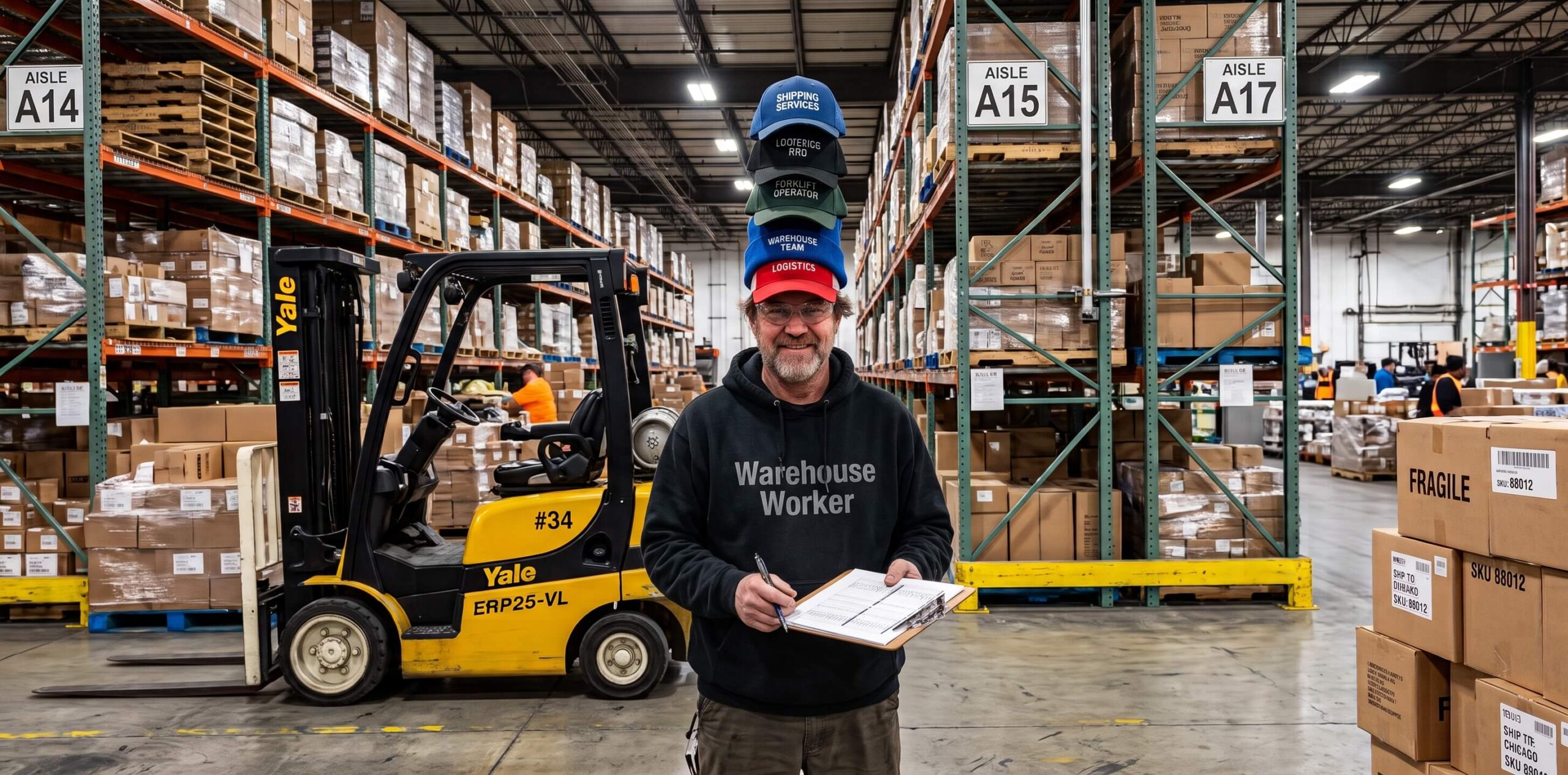
But “warehouse worker” isn’t a job. It’s six different jobs (or more).
Post one req for a general warehouse laborer and you’ll get candidates who can absolutely work in a warehouse. Just not necessarily yours, and not necessarily in the role you actually need filled next by Monday.
And that gets expensive. Because a person who can unload a container in 90-degree heat isn’t automatically the person who can hold pace and accuracy on a high-speed pick line for eight hours straight.
A forklift operator with ten years on a sit-down counterbalance might’ve never touched a reach truck, and your racking doesn’t care how many years they’ve got if the equipment’s wrong.
Someone who’s worked in a warehouse before could mean six months of receiving, or six years of order picking, and those two people would struggle to swap jobs on day one.
None of that shows up on a warehouse worker’s resume. It shows up three weeks in, when the wrong-fit hire is behind on quota, frustrated, or gone — and you’re back where you started.
The Real Problem: Warehouse Work Isn’t One Skill Set
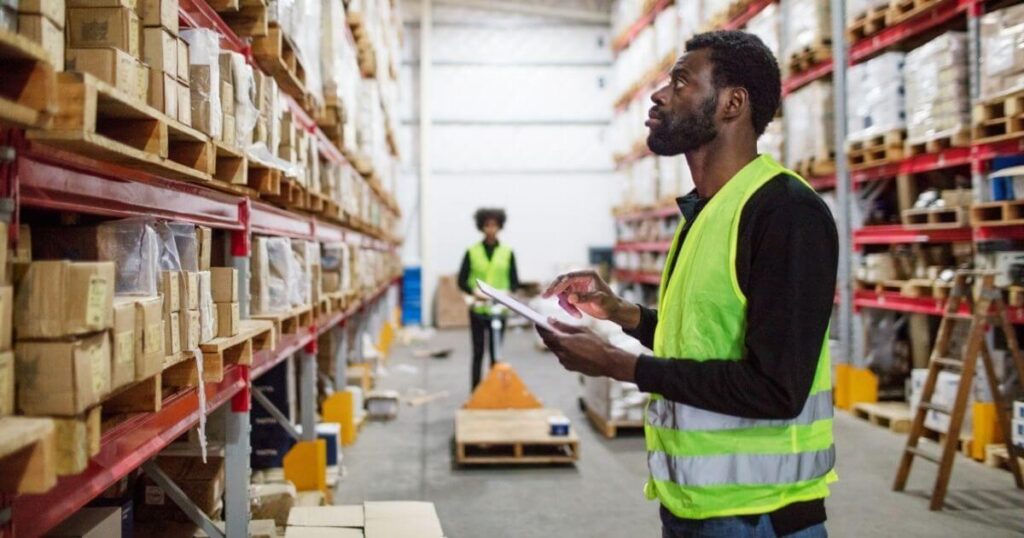
Every role inside a warehouse asks for a different combination of speed, precision, equipment familiarity, and judgment.
Picking rewards sustained pace.
Receiving rewards accuracy and comfort with systems.
Shipping rewards deadline discipline and paperwork that actually matches what’s on the truck.
Those aren’t variations on the same job. They’re different jobs that happen to share a building. Treat them as interchangeable, and you’re hiring based on a label instead of the work.
How to Turn a Warehouse Job Into the Right Requisition
This is the framework we use before we ever send a candidate, because “can this person work in a warehouse” is the wrong question. The right one is “can this person do this warehouse work.”
| If your operation needs: | Look for: | Post In the Req: |
|---|---|---|
| High-volume picking | Sustained pace + accuracy under repetition | Expected pick rate, order volume, shift length, and accuracy requirements |
| Forklift work | Specific equipment experience — reach, counterbalance, order picker aren’t interchangeable | Exact equipment required: reach truck, counterbalance, order picker, etc. |
| Receiving | Accuracy + comfort working inside your systems, not just physical handling | WMS or systems used, documentation responsibilities, and inventory requirements |
| Shipping | WMS familiarity + documentation habits + deadline discipline | Shipping volume, paperwork responsibilities, WMS or systems used,, and cutoff times |
| Seasonal labor | Attendance reliability + physical stamina + schedule flexibility | Shift schedule, assignment length, expected overtime, and physical demands |
| Leads | Labor allocation instincts + coaching ability + productivity awareness | Team size, shift responsibilities, performance metrics, and leadership expectations |
Six rows, six different hiring conversations. And those are just broad categories. The actual work inside each one can look completely different from one warehouse to the next.
For example, a forklift operator might spend one shift unloading trailers and another replenishing high-bay racking. A picker working with small e-commerce orders has a very different day from one pulling oversized industrial products.
The label “warehouse worker” was never going to cover that range. That’s the point.
And seasonal warehouse labor? That’s another hiring conversation entirely. When you’re filling 40 slots ahead of a peak, reliability and physical stamina can matter just as much as experience, while accuracy and safety remain non-negotiable.
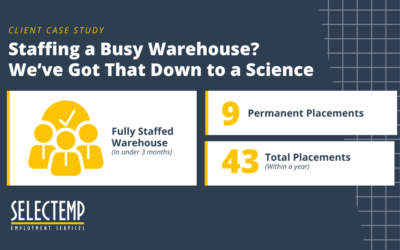
Staffing a Busy Warehouse? We’ve Got That Down To A Science
Read the Case Study
FAQs With Selectemp Recruiters
What does “warehouse experience” actually tell us? What should you include in a requisition? And what are recruiters looking for before they send someone your way? We asked our practice leaders who have these conversations every day.
What do you ask when a warehouse client says, “We just need someone with warehouse experience”?
“What will they actually be doing for eight hours?” says practice leader Wendy Juhl. “Are they picking, loading, replenishing, driving a reach truck? Once I know that, I can start looking for someone who can actually do the intended job.”
What’s the most common thing employers leave out when they ask for a warehouse worker?
“Usually, it’s the pace,” Marissa Logan explains. “They’ll tell us they need someone with warehouse experience, but not that the person needs to hit a specific pick rate or keep up with a certain volume. Those details change who we’re looking for.”
What’s the difference between a candidate who looks good on paper and one you feel confident sending to a warehouse?
“I care less about seeing ‘warehouse associate’ six times on a résumé than knowing what they actually did in those jobs. Were they picking? Loading? Operating equipment? And how much of their shift were they doing each task?” says Cary Kuvaas.
Does giving you more detail actually make a difference in finding a better match faster?
“Absolutely,” says Rhonda Elliott. “‘Warehouse experience required’ doesn’t give us nearly as much to work with as ‘reach truck experience, second shift, 75% equipment operation, 50-pound lifting requirement.’ The more specific the req, the faster we can narrow the field to people who actually fit.”
What This Means Before You Post The Next Job
Before the next job goes out, get specific about what you’re actually filling. Write down the equipment, pace, shift, physical demands, and performance expectations that actually define the job.
Then hire against those requirements.
As a warehouse staffing agency, that’s the conversation we have with every client before a single resume goes out, because getting the role right upfront is what makes our two-day placement guarantee possible, not a lucky guess.
Talk to a Selectemp recruiter about your warehouse staffing needs →