Manufacturing operations run on consistency.
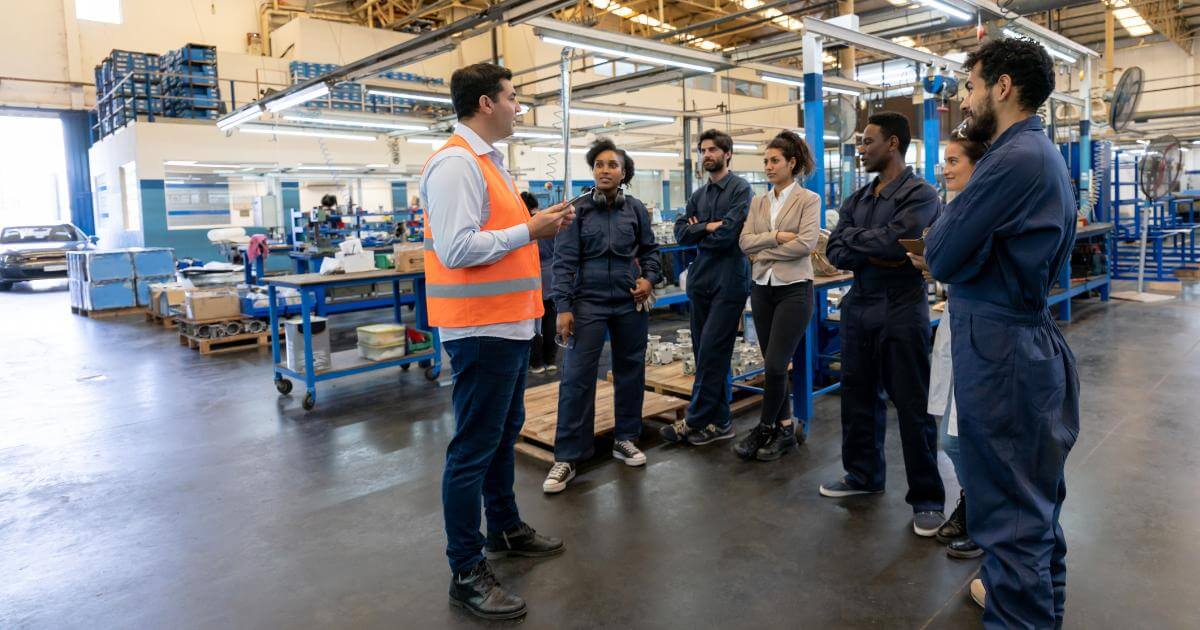
Workers who’ve spent months (or years) on your floor don’t just know their job. They know your floor.
They know how a specific press sounds when something’s off, where the slick spot forms near Line 3 after a wash-down, and how to keep pace with the person next to them without saying a word.
When workforce turnover increases, that institutional knowledge walks out the door with every departing employee. And safety can quickly become a casualty — pun intended.
New workers have to learn the environment fast, often while production schedules stay tight and experienced employees are already stretched trying to hit output targets. Even with solid training programs in place, a constantly rotating workforce makes it harder to maintain the safety awareness that experienced teams build naturally over time.
For manufacturing leaders, this is where workforce strategy stops being an HR issue and starts being an operational one. Stabilizing your workforce — often through proactive manufacturing staffing strategies — helps reduce disruption while keeping both productivity and safety on track.
Understanding the relationship between turnover and workplace safety is the first step toward managing both. Let’s put on our safety glasses and take a look.
Why High Turnover Creates Safety Challenges in Manufacturing
New Employees Are Your Highest-Risk Workers
Manufacturing environments are built on experience. Workers who’ve been on the floor for months and years develop a kind of instinctive awareness — they recognize when a machine is behaving differently, when a process is drifting, when something just doesn’t feel right.
New employees haven’t had time to build that yet.
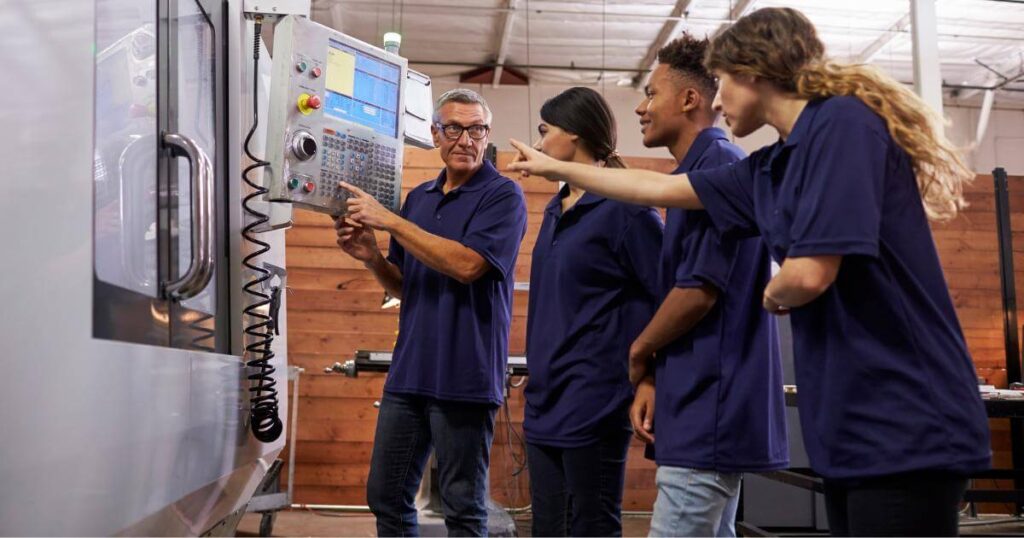
When turnover is high, you can end up with multiple new workers learning processes at the same time. Supervisors are split between training and production demands. Experienced employees are fielding questions while still trying to meet their own numbers.
A study by Travelers analyzing over 1.2 million workers’ compensation claims found that first-year employees account for more than one-third of all claims, despite representing a fraction of the total workforce.
That’s not a coincidence. It’s the learning curve showing up in your incident reports.
Training programs absolutely help. But the risk is real, and it’s higher than most manufacturers account for in their workforce planning.
High Turnover Breaks Team Cohesion
In manufacturing, the person next to you matters. Teams develop communication patterns, cover each other’s blind spots, and move through complex tasks with a shared rhythm that takes time to build.
When turnover is high, that rhythm resets. Shift changes become more complicated. Handoffs carry more risk. Experienced workers absorb more responsibility, and burnout follows.
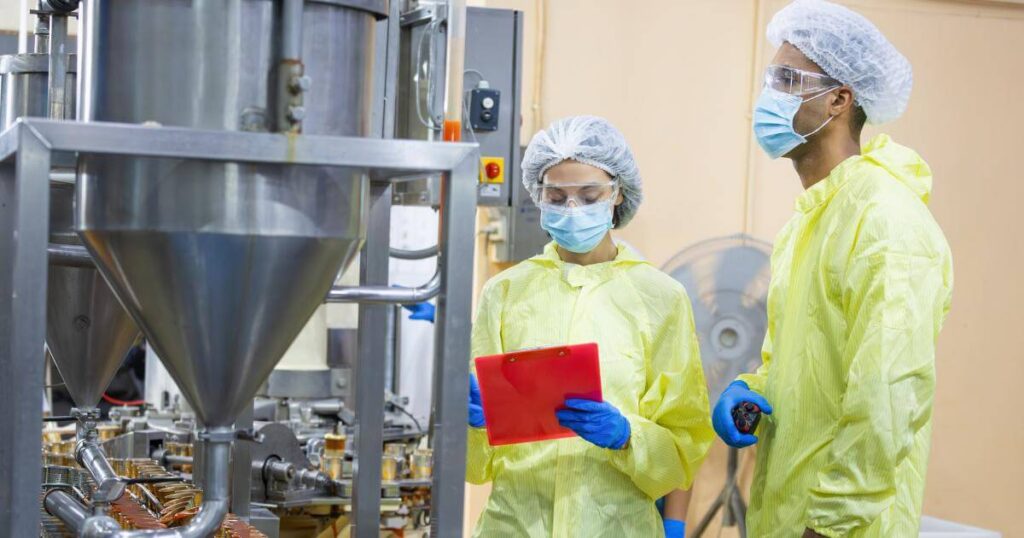
In food manufacturing facilities, for example, a miscommunication during a shift change isn’t just an efficiency problem. It can mean improper equipment handling, skipped safety checks, or an untrained operator left to figure something out on their own.
Small errors compound quickly on a production line.
A Strong Safety Culture Cuts Turnover Too
Here’s the dynamic manufacturers often miss: safety culture and retention aren’t separate problems. They’re the same problem.
When employees feel like their safety is genuinely prioritized — not just posted on a sign, but backed by real investment in training, proper equipment, and active oversight — they’re more likely to stay. Workers in high-risk environments are especially sensitive to this.
A facility that cuts corners on safety signals that it cuts corners on everything.
Companies that integrate safety expectations from day one, extend those standards to every seasonal and temporary hire, and reinforce safe behavior through ongoing incentives consistently see lower turnover alongside better safety outcomes.
The investment pays in both directions.
How Seasonal Hiring Contributes to Workforce Churn
Manufacturing operations in industries like food production, packaging, agriculture-related processing, and consumer goods often experience predictable demand spikes. To meet these production surges, companies bring in temporary or seasonal workers — often all at once, often fast.
For manufacturers in the Pacific Northwest, agriculture cycles, food processing seasons, and demand for consumer goods create predictable but intense production swings. The runway between “we need people” and “we needed people yesterday” is shorter than almost anywhere else.
These hires are essential for maintaining output. But they also mean periods where a large number of employees are learning the job at the same time.
While production schedules stay tight, supervisors are stretched thin, and your experienced workers are fielding questions instead of just doing their jobs.
The challenge of keeping everyone safe and productive while the line keeps moving? That’s Level 11 on a scale of 1 to 10.
When onboarding is rushed or supervision is stretched, safety awareness suffers. Even small errors — miscommunication between shifts, improper equipment handling, unfamiliarity with safety procedures — can disrupt operations fast.
Strategic Workforce Planning: Getting Ahead of the Curve
One of the most effective tools manufacturers have against turnover-related safety risk is one they often underuse: planning ahead.
Facilities that begin building their seasonal workforce 30–45 days before production surges experience significantly fewer operational disruptions than those hiring reactively. When you’re scrambling to fill 20 positions two weeks before peak season, you hire whoever you can get, onboard them fast, and hope nothing goes wrong.
That’s where incidents happen.
Demand forecasting and seasonal workforce planning give you the runway to hire deliberately, onboard thoroughly, and have experienced workers available to mentor newer ones — instead of trying to babysit an entire new cohort while keeping the line moving.
Cross-Training is Good for Flexibility, Better for Safety
If planning ahead gets you the runway, cross-training is what you do with it. It’s often filed under productivity strategy. It’s also one of the most underrated safety tools in manufacturing.
When experienced workers can step into multiple roles across the operation, you’re not dependent on new hires filling critical positions on the fly.
Consider a food manufacturing plant ramping up for a holiday production surge. Cross-trained employees can move between production lines as needed — which means when volume spikes, you’re not backfilling your highest-risk stations with your least experienced people.
From our conversations with manufacturing leaders across the Pacific Northwest, cross-training consistently comes up as a game-changer — not just for flexibility, but for retention.
Workers who see their skills being developed and valued are less likely to leave. And a more stable team means fewer inexperienced workers rotating through the areas where consistency matters most.
Investing in Employee Well-Being: More Than a Paycheck
Competitive pay matters. So do benefits. But manufacturers with the lowest turnover tend to go a step further: they invest in the overall well-being of their workforce, not just the compensation package.
Seasonal pay differentials are one lever. Offering stronger wages during peak demand periods helps attract workers and reduces attrition at the worst possible time.
But facilities that go beyond the paycheck — investing in mental health support, ergonomics, and genuine safety communication — tend to build something harder to replicate: loyalty.
Workers who aren’t burned out, aren’t stressed, and feel like the company actually cares about them make fewer mistakes. That’s not a soft benefit — it shows up in your incident data.
Don’t Stretch Your Existing Team to the Breaking Point
When demand spikes and headcount is short, the tempting move is to push your existing workforce harder. Extended shifts, skipped breaks, extra responsibilities layered onto already-stretched supervisors.
This is where turnover and safety risk collide head-on.
Overworked employees make more mistakes. They also leave. And when they leave, they take their experience with them — leaving you even more reliant on new hires who need more supervision than you can provide.
Temporary staffing solutions are one way to absorb demand surges without overloading your core team.
The key is working with a staffing partner that specializes in manufacturing environments — one that maintains pools of workers already familiar with production settings, equipment workflows, and industrial safety expectations.
That’s a meaningfully different outcome than a general-purpose agency sending you whoever’s available.

Building a Pool of Returning Workers
One of the most effective (and underutilized) strategies for reducing seasonal hiring risk: nurture workers who come back.
Returning seasonal employees already know your facility, your processes, and your safety expectations. They don’t need full onboarding. They get up to speed faster, require less supervision, and carry institutional knowledge that new hires simply can’t replicate in their first few weeks.
Maintaining relationships with reliable seasonal workers pays off significantly when the surge hits. That means keeping them informed about upcoming production cycles, offering return incentives, and making them feel valued during off-peak periods.
Safer Manufacturing Starts with Workforce Stability
Turnover will always be part of manufacturing operations. Demand fluctuates. Seasons change. Life happens. You can’t eliminate workforce churn entirely.
But the safety risks that come with it? Those are manageable.
Facilities that plan ahead, build structured onboarding, invest in their people, and partner with the right staffing resources can scale their workforce without watching incident rates climb every time the calendar turns.
The goal isn’t just filling open roles. It’s maintaining the consistency that safe, productive manufacturing environments depend on — and making sure the people walking your floor tomorrow are as prepared as the ones who’ve been there all year.
Want More Workforce Management Insights?
For more on hiring, workforce stability, and manufacturing staffing strategies, head over to our Employer Insights hub.